MoMA's Full Disclosure Explores the Edge of Information Design
Paola Antonelli's Full Disclosure at MoMA spans AI-generated synthetic memories, Forensic Architecture's Iuventa film and Calculating Empires, reframing information design for a low-trust era.
Programme
- Full Disclosure: The Edge of Information Design, curated by Paola Antonelli, runs at MoMA from 27 September to 13 June 2027.
- Domestic Data Streamers' Synthetic Memories Archive uses AI-generated images from real people's prompts, with a therapeutic application for trauma and dementia patients.
- Kate Crawford and Vladan Joler's Calculating Empires covers three walls, tracing communication and culture since 1500.
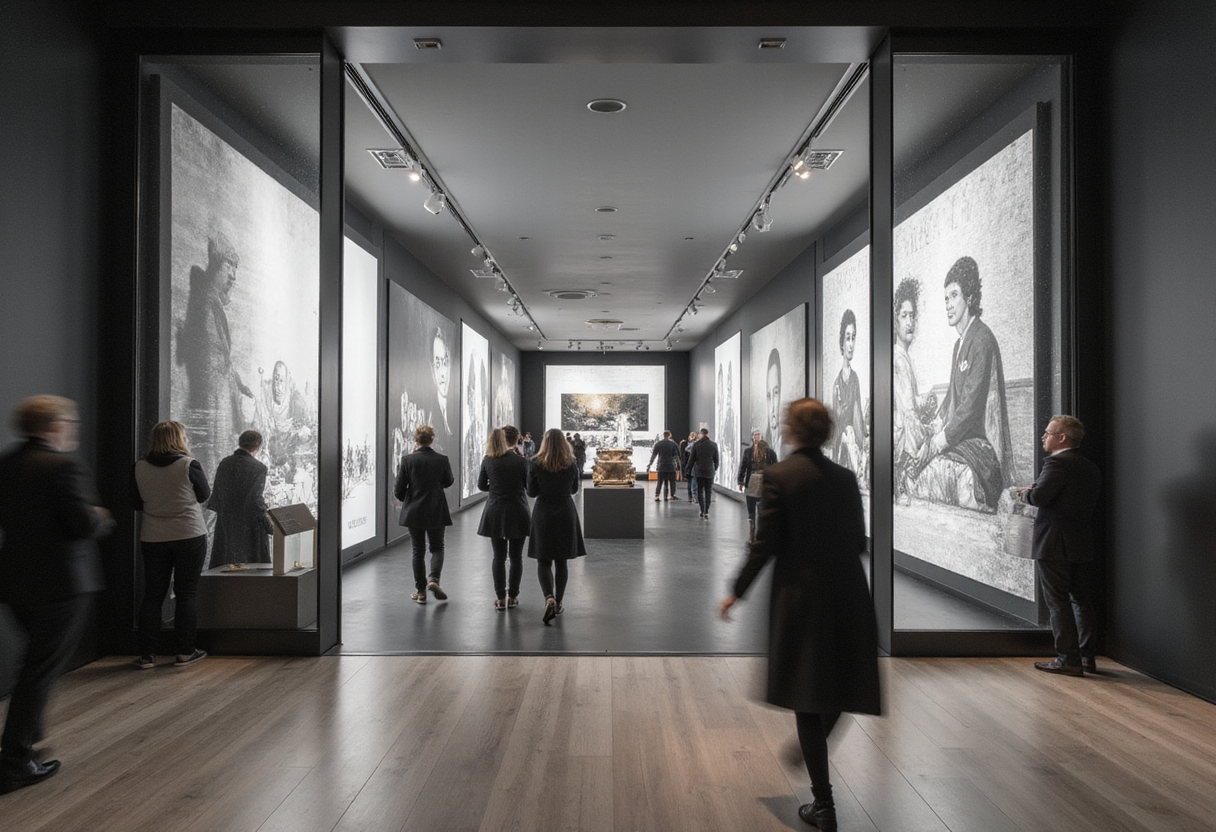
The Museum of Modern Art in New York has opened Full Disclosure: The Edge of Information Design, a survey curated by Paola Antonelli that stretches information design from classic infographics to AI-generated reconstructions of missing personal memories.
The exhibition, on view in a windowed ground-floor gallery, includes works from The Synthetic Memories Archive by Barcelona-linked Spanish research and design studio Domestic Data Streamers. The studio's 2D wall pieces carry images generated by artificial intelligence from prompt texts written by real people. Each prompt, based on a reconstructed personal memory, appears beneath the picture.
The project aims to build an archive of these memories. Domestic Data Streamers also applies the technology therapeutically, working with people who have trauma or dementia.
The show draws on MoMA's own holdings, and many pieces previously appeared in Antonelli's 2008 exhibition Design and the Elastic Mind. Her definition of the discipline runs wider than statistics bureaus.
"[Information design] is not always about data sets acquired from a scientific or a statistical entity," Antonelli told Dezeen.
Statistical work still anchors the exhibition. Laura Kurgan and Dan Miller's model Two Sides of the Same Coin maps the geographic distribution of "human-associated microbes" on one side and more than 12,000 years of global land use on the other, depicting biodiversity loss.
Antonelli said she wanted to foreground the investigative character of information design at a moment of deep distrust in institutions. She singled out designers who build their own data sets, calling that a "complete design".
"In this particular moment where our trust is vacillating every day, I wanted to show how you're right not to trust anybody, but at least you can follow a designer's, a journalist's, a politician's path – to see whether you agree with the end product or not," Antonelli said.
That investigative bent appears most clearly in London-based Forensic Architecture and Forensic Oceanography's film The Seizure of the Iuventa. The film documents the team's use of recreations and models, including remote sensing, to support an NGO rescue boat accused by the Italian government of smuggling in the Mediterranean.
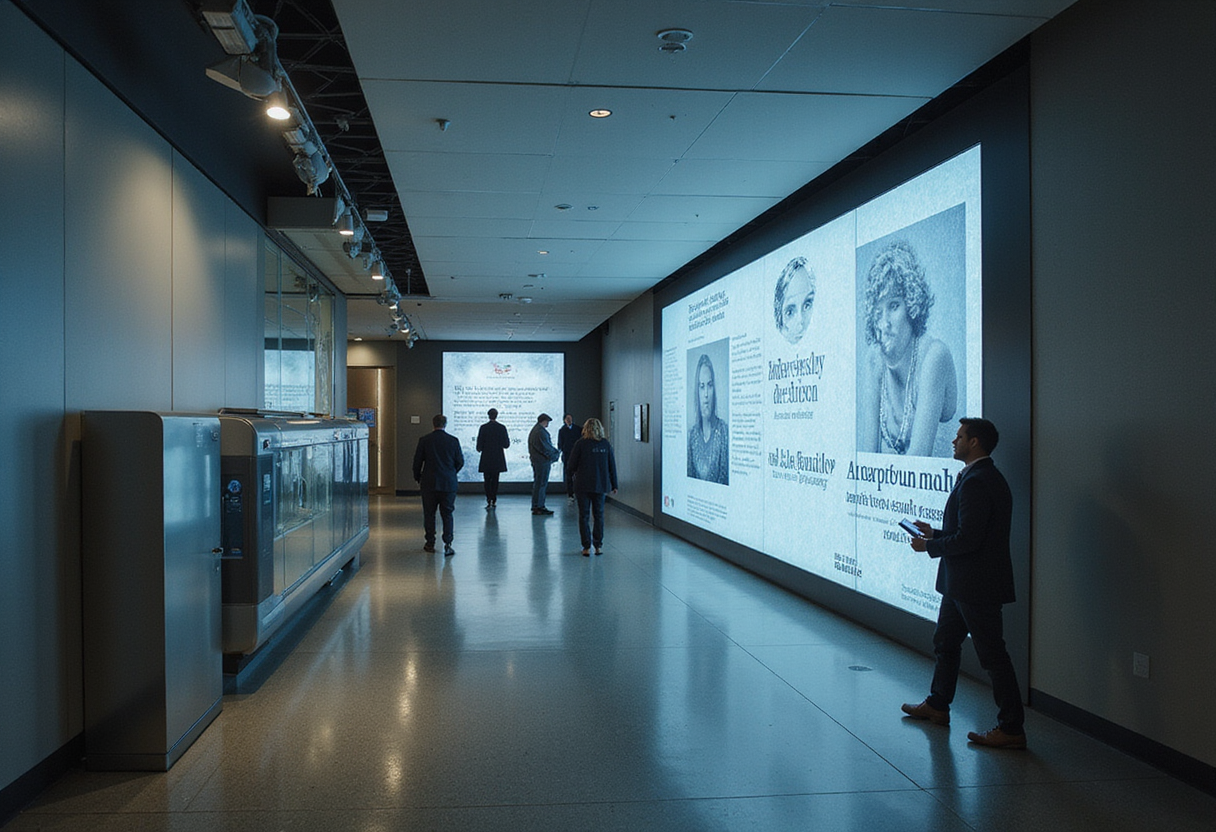
Where information design typically compresses complexity into digestible form, some objects in the show do the opposite. Antonelli installed Kate Crawford and Vladan Joler's Calculating Empires in a side room, where icons and text cover three walls, tracing institutions and theories across human culture and communication since 1500.
William Villalongo and Shraddha Raman's graphic work extends data collected by W.E.B. Du Bois on the African diaspora and African American employment into the 21st century. Digital displays present New York Times interactive articles on the Notre Dame fire and the Tulsa Race Massacre, showing information design at work in digital media.
Most projects in the show were made digitally. Giorgia Lupi and Stefanie Posavec's ink-and-pencil Dear Data series is the exception: a correspondence of postcards between the two data designers depicting elements of their everyday lives.
For Antonelli, the medium is secondary to the message.
"The medium itself doesn't really matter," she said. "People can narrate data."
"It's about recognising the effort to explain complex information in a truly understandable way."
Antonelli has previously argued that designers can help slow humanity's decline from climate change, and in 2023 Pulitzer Prize winner Mona Chalabi told Dezeen that "data replicates the existing systems of power" — a tension this exhibition keeps in view.
Full Disclosure: The Edge of Information Design runs at MoMA from 27 September to 13 June 2027.
Original: moma.org
More from Tom Whitfield
Show full bio
Market editor covering industry trends and analytics at Arts & Voices.
244 articles