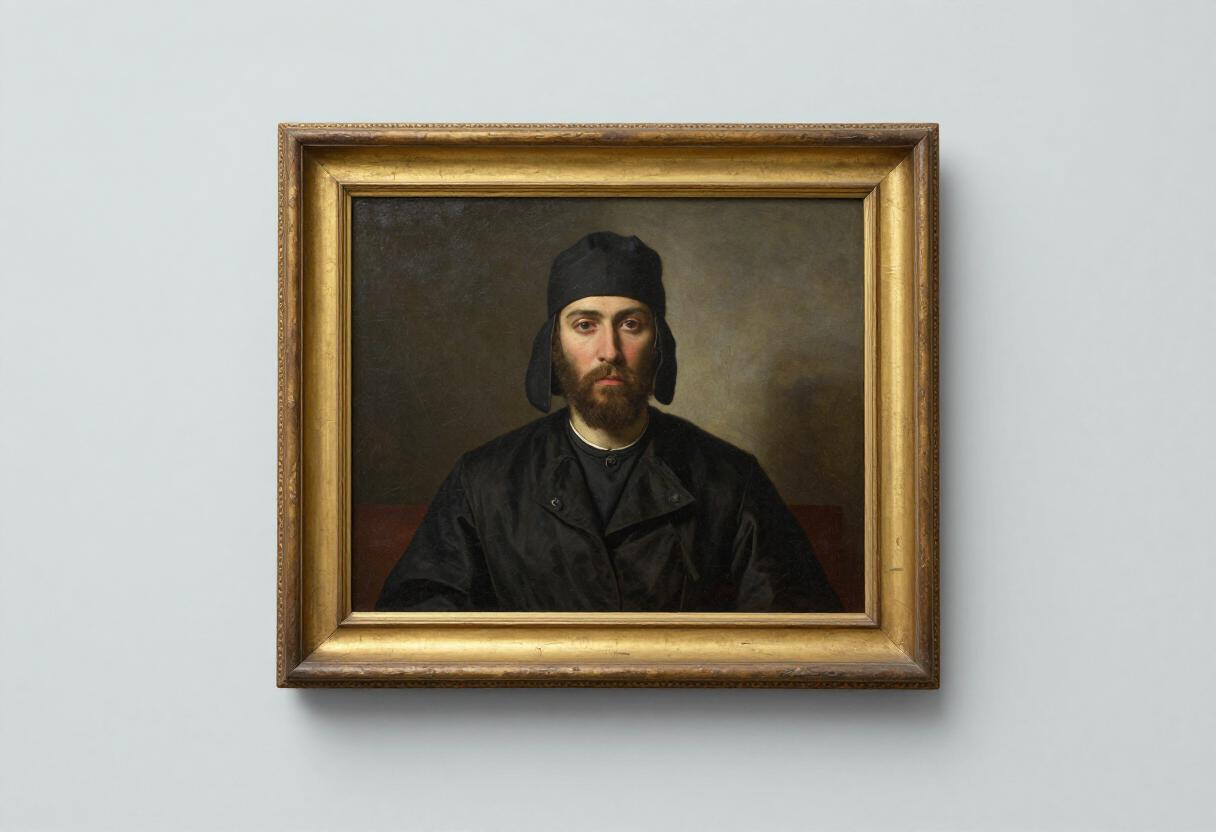
Thomas Kaplan Revealed as Buyer of Rembrandt's St John on Patmos
The Leiden Collection's Thomas Kaplan bought Rembrandt's St John on Patmos for $9 million. Last exhibited in 1923, it becomes his 18th work by the Dutch master.

Programme
- Thomas Kaplan bought Rembrandt's St John on Patmos (ca. 1660) for $9 million at Sotheby's in December, making it the 18th Rembrandt in his Leiden Collection.
- The painting was last exhibited in 1923; Wilhelm Valentiner bought it for $525 in 1913 and recognized it as a Rembrandt.
- Kaplan previously sold Rembrandt's drawing Young Lion Resting for $18 million in February, supporting wild cat conservation group Panthera.
Thomas Kaplan, the world's largest Rembrandt collector, has been revealed as the buyer of Rembrandt's St John on Patmos (ca. 1660), which sold for $9 million last December, according to The Art Newspaper.
The acquisition makes the American businessman and owner of the Leiden Collection the holder of 18 works by the Dutch master. Kaplan said he bought the painting to preserve it by ultimately "returning to the public domain, a breathtaking late masterwork that has been hidden from sight for over a century" while adding to "the core narrative of our collection." The painting was last exhibited in 1923.
The work's provenance reads like a novel. In 1904, an American dealer owned it and attributed it to the Dutch artist Carel Fabritius. In 1913, the German art historian and Metropolitan Museum of Art curator Wilhelm Valentiner acquired it for $525. He recognized it as a Rembrandt, kept it in his personal collection and for many years believed it portrayed Rembrandt's son Titus.
The painting later passed to Fritz Thyssen, heir to one of Germany's leading industrial families. Thyssen, an early supporter of Adolf Hitler in the 1920s, became a vehement critic of the dictator by the late 1930s. In 1941 he attempted to flee the Nazis, was caught, and was sent to the Sachsenhausen and Dachau concentration camps. The Rembrandt was seized, then restituted to him in 1950, when he was living in Buenos Aires, Argentina. His grandson Federico Zichy Thyssen inherited the painting; after his death in 2014 it passed to a family charitable foundation.
A routine cleaning at Sotheby's ahead of last year's sale revealed a figure attributed to St John on Patmos, identified through symbols in the painting: a palm tree representing the Greek island of Patmos and an eagle associated with St John.
Arthur Wheelock, the 17th-century Dutch specialist who closely advises Kaplan, told The Art Newspaper that the artist used his son as a model for the work. "Rembrandt's decision to ask Titus to model for St John suggests that he felt an underlying connection between his own affection for his son and the evangelist's place in the Christian story," Wheelock said.
The purchase extends a pattern of collecting and selling that defines Kaplan's approach to the artist's market. In February this year, Kaplan sold Rembrandt's drawing Young Lion Resting for $18 million at Sotheby's, with proceeds supporting Panthera, the global wild cat conservation organization.
Whether St John on Patmos, hidden from public view for more than a century, will now enter the Leiden Collection's long-term loan programme alongside Kaplan's other Rembrandts remains the question museums on both sides of the Atlantic will be watching.
Original: theartnewspaper.com
More from Marcus Bennett
Show full bio
Staff writer covering industry trends and analytics at Arts & Voices.
174 articles