Plywood Wainscoting Gives a 3,600-Square-Foot Brooklyn House Its Soul
A Brooklyn couple hired Somerset House's Alan Eckstein after one browsing visit. Oak plywood wainscoting, inspired by Jean-Michel Frank, now defines their 3,600-square-foot home.
Programme
- Alan Eckstein, cofounder of Somerset House in Queens, designed the 3,600-square-foot Brooklyn home with Studio BAD.
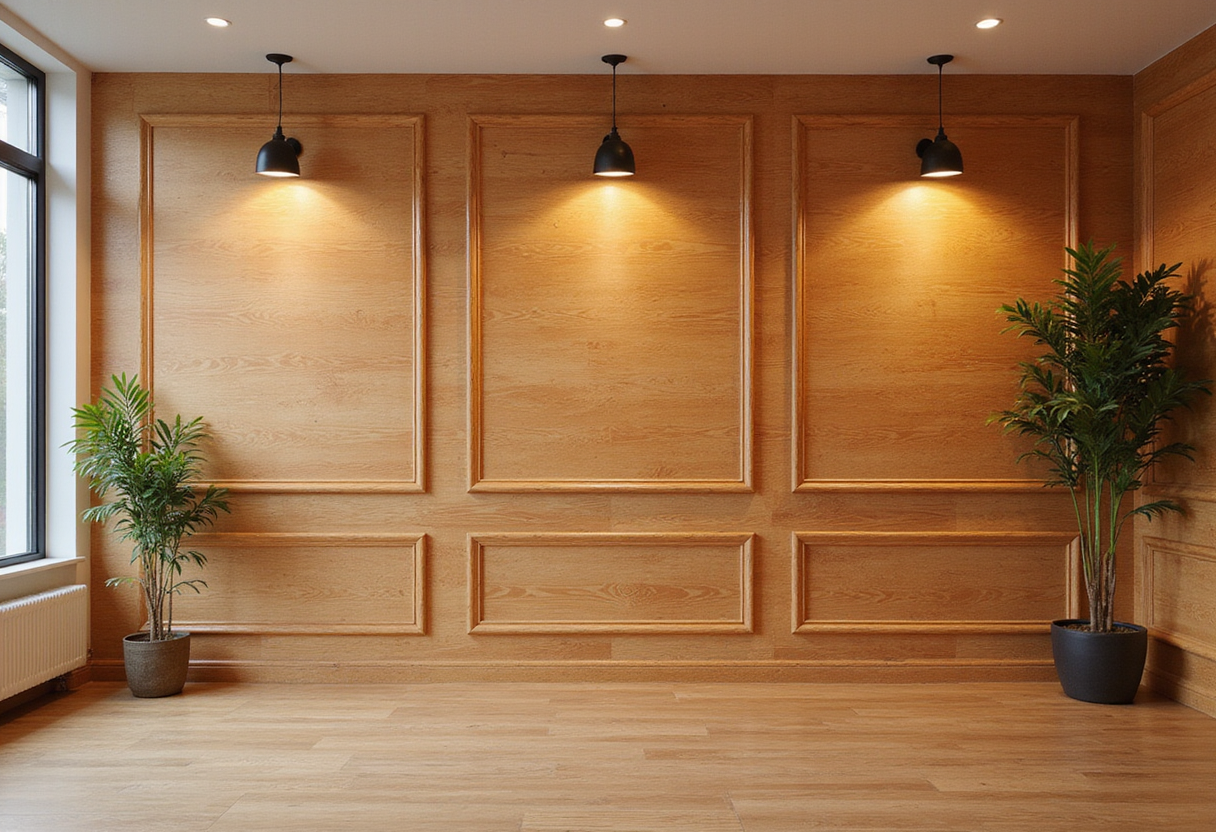
- Oak plywood wainscoting inspired by Jean-Michel Frank's 1920s Paris interiors took about six months to complete and defines the house.
- The finished home is roughly 80 percent vintage, about half sourced from Somerset House's own inventory.
A Brooklyn couple walked into Somerset House, the collectible design gallery in Queens, intending to browse furniture. They left with a designer for their entire 3,600-square-foot house.
The couple had hired Alan Eckstein, who cofounded Somerset House with his wife, Haley Loewenthal, after a single browsing appointment. Eckstein had only recently expanded from sourcing and staging into fully designing homes, and had just a few completed projects to his name. Still, something clicked.
"Maybe it was a risk in some ways, but we just felt really good about taking that leap with him and building something together," the husband says. He describes Eckstein as an instant friend with a "wonderful nerd" quality that suited the process.
The family had traded their original dream of a historic brownstone—which felt too compressed—for an extra-wide house with high ceilings, open spaces and garden views, better suited to life with growing children. But the gut-renovated interiors lacked any true character. That blank, cookie-cutter palette demanded the project's biggest intervention, not the furniture.
"I did not want bare. I did not want cold. I did not want a minimalist playground," Eckstein says. "I wanted life, I wanted warmth everywhere."
He found his answer in what he calls an obscure reference: unadorned maple plywood wainscoting in Jean-Michel Frank's 1920s interiors for Marie-Laure and Charles de Noailles's town house in Paris. The couple hesitated when old photos and renderings showed a lot of wood, and a lot of plywood. Eckstein persuaded them, and oak plywood now runs as wainscoting throughout the home and clads the staircase.
Getting there took work. Plywood is a common, simple material, but every piece stains differently. Early attempts came out too red, too yellow and too golden. "I lost sleep over that process," the wife says. Designed with Studio BAD and finished with rounded bullnose trim, the wainscoting took about six months to get right. It now defines the house.
"I couldn't even imagine this home without the wood," the wife says.
The finished home is roughly 80 percent vintage, about half of it from Somerset House's own inventory. In the living room, a bespoke credenza with vinyl pockets runs across the wall, anchoring the space. Valuable pieces appear throughout, including a pair of oak Guillerme et Chambron French armchairs, but nothing feels precious.
"Everything here could take life, could take abuse for the most part," Eckstein says. "I wanted to use every inch of the space as one big conversation, one big hangout."
The open living space connects to a dining area where Somerset House's DNA shows openly. Above a midcentury dining table hang a pair of 1930s "PH3" pendants by Poul Henningsen—a copper set sourced from a home where they had hung for about 90 years.
Color drives the other rooms. The couple longed for a proper dressing room after years of cramped or nonexistent closets. "My last closet was in my son's bedroom," the husband says. They wanted a fully monochromatic room, understated enough to look at home in a Prada store.
The wife first proposed pink; the husband swiftly rejected it. Green briefly led. A change of heart brought them to blue, though not before sifting through more than a dozen shades that all started to look the same. "You don't want it to become a cartoon of a room," the wife says. They settled on Benjamin Moore's Bluebelle, paired with a lustrous carpet and a 1930s Murano glass ceiling light.
"It's a very happy space for us," she says.
A guest room that doubles as an office took stronger doses of color. The couple hesitated to devote a whole New York room to "an empty bed waiting for someone to stay over, because that's such a waste," the husband says. Instead it became what he calls a "hilarious red room"—a little over-the-top while staying cozy, like Hugh Hefner's smoking jacket.
Guests, the couple says, remark on how elevated the home looks without a trace of pretension, and how it doesn't feel like New York at all. Even in the dead of winter, the house stayed full of life. "It's gorgeous, every detail is considered, and it's immaculate," the wife says of Eckstein's aesthetic. "But it's not untouchable."
The project makes the case that a humble sheet material, handled with patience and a historical reference, can outshine far costlier finishes in giving a renovated house its identity.
Source: Architectural Digest
More from Marcus Bennett
Show full bio
Staff writer covering industry trends and analytics at Arts & Voices.
197 articles