Volcanic Stone Lamp Holds a Sunrise at Design Week México
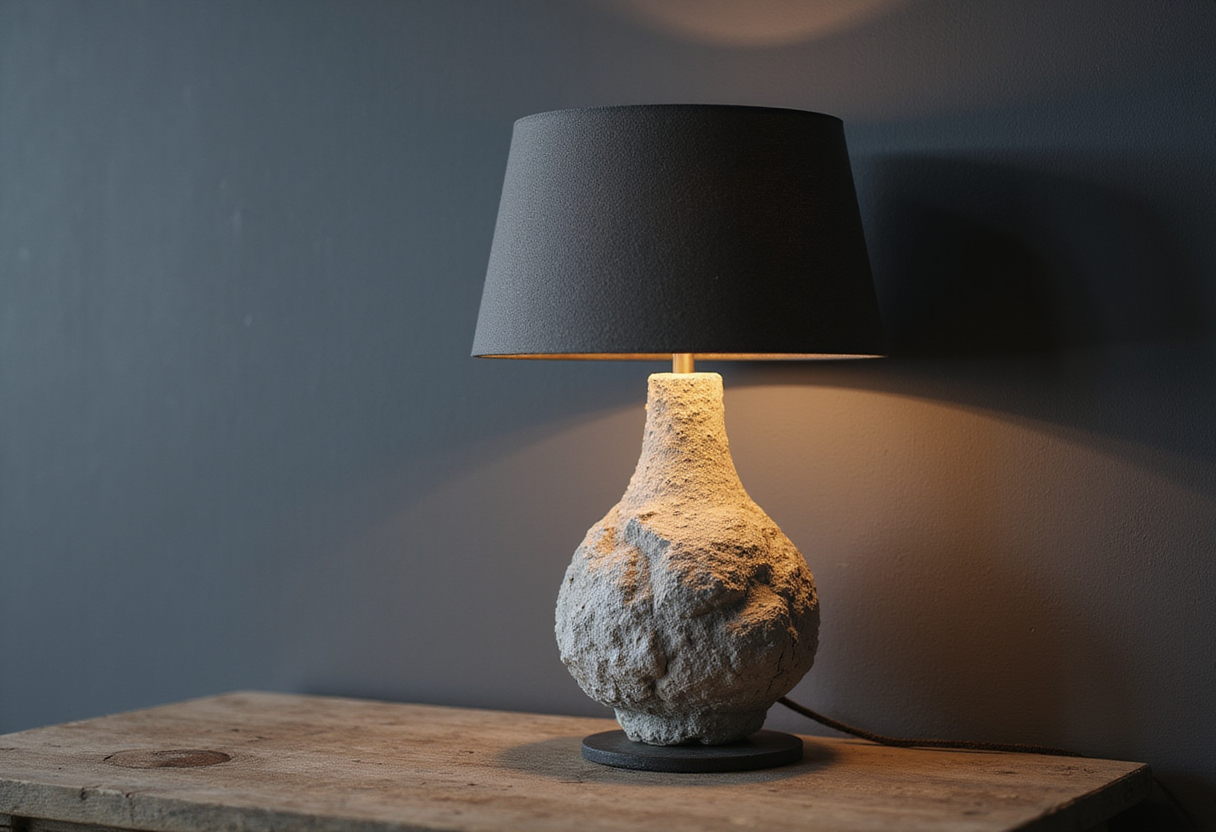
A volcanic stone lamp informed by the Legend of the Suns leads thirteen student works from Tecnológico de Monterrey at Inédito Universitario 2026, Design Week México.
Programme
- Thirteen pieces by design students at Tecnológico de Monterrey are shown at Inédito Universitario 2026 during Design Week México.
- All works come from the course Black: A Study of Mexican Dark Matter, taught by tutor Luis Miguel Gutiérrez.
- Pieces use black clay, volcanic stone, marble, charred wood and ceramics, developed with artisans across Mexico.
A table lamp carved from volcanic stone, its bulb rising like a sun between mountains, anchors a thirteen-piece exhibition by design students at Tecnológico de Monterrey, presented as Inédito Universitario 2026 during Design Week México.
The lamp, titled Tlecuil and created by student Sophie Nicole Aguilar Ramírez, holds its light in a crater carved into a volcanic stone base. A hand-dyed cotton cloth shade fades from black to ochre. "The name comes from the Nahuatl word for hearth, the hollow where fire is kept," according to the project description. The piece draws on the Legend of the Suns, in which Nanahuatzin throws himself into the hearth and his sacrifice lights the fifth sun.
All thirteen works come from the course Black: A Study of Mexican Dark Matter, taught by tutor Luis Miguel Gutiérrez in the school's Faculty of Architecture, Art and Design. The students developed the pieces alongside artisans and workshops from different regions of Mexico.
"In Mexico, black has been matter before pigment, an ancestral tradition in which colour is born from origin or from fire," the school states. "Black takes up that heritage through contemporary design, with pieces whose tone comes from the material itself: black clay, volcanic stone, marble, charred wood and ceramics."
The exhibition's monochromatic core means, in the school's words, that "every object is read through its form and the trace of the process that turned it black."
Gabriela Covarrubias Rodríguez contributes Tatemada, a table lamp made of black clay from Oaxaca. Inspired by the region's traditional smoke kitchens, its rough finish evokes soot buildup while warm light emerging from its openings stands for the warmth of a wood fire.
Mariana Gayón García's Estrato is a tabletop book organiser in black volcanic stone that, in the student's framing, links "the memory of the earth with the knowledge held in books." Lucía Gallegos Bátiz's Comitl, a decorative vessel, takes its silhouette from the cuexcomate, the ancestral corn-storage structure.
Juan Pablo Castillo Villalón's Inframundo, a ceramic cup and cacao filter, divides its geometry into three sections representing the underworld, the human world and the celestial world. The black colour emerges naturally during firing through glazes with natural pigments and reduction reactions.
Emanuel Reyes Díaz's Veda, an appetiser plate on a volcanic stone base under a frosted glass dome, borrows its mechanism of concealment and reveal from censorship in Mexican cabaret cinema — cine de ficheras — "drawing a parallel between desire and appetite through anticipation, reveal and enjoyment."
Not every piece is dark matter. Alejandra Arnaud Escobar's Bartola, a stool in purpleheart wood with leather and brass fittings, draws on cowboy aesthetics and rests, according to its author, on three core ideas: craft, material and character. Paulina Ibarra Gutiérrez's Bucle scales crocheted wire panels into a modular shelving system, challenging the historical devaluation of manual work as domestic labour.
Tamara Cagigal Esclusa's Rastro uses two charred-wood modules to evoke the textures of cooling lava, while Anabella Cariño Olivier's El Resguardo — three containers named Teresa, Carola and Lidia — pairs black Tecali marble with charred maple lids, keeping each block's natural grain as evidence of its origin.
With Inédito Universitario 2026, Tecnológico de Monterrey positions student design not as exercise but as a working argument: that Mexican craft traditions, materials and myths can generate contemporary objects on their own terms.
Original: tec.mx
More from Daniel Okafor
Show full bio
News editor covering consumer brands and retail at Arts & Voices.
176 articles